They say people get used to anything. I don’t really believe that. Or rather, I think people shouldn’t get used to everything.
To yet another woman being murdered.
To a worker leaving home to go to work and not returning home that evening.
That children’s equal access to education should depend on their families’ financial circumstances.
That people should die on our roads.
That public resources should be squandered.
That, when a disaster strikes, responsibility should be passed from one institution to another, from one person to another.
And that, a few days later, we should forget all of this and carry on with our lives.
***
Perhaps one of the things we should fear most in recent years is this: normalising the abnormal.
Because after a while, people get used not only to what happens, but also to the fact that nothing changes afterwards.
A disaster strikes. An investigation begins. Statements are made. A few people are dismissed, or brought before the courts. Then life goes on.
A woman is murdered. We all get angry together. We talk about it for a few days. Then the agenda shifts until the next report of violence comes along.
Schools reopen, and we discuss the prefabricated classrooms, the shortage of teachers, and the fact that children with special needs cannot access education.
We lose another life on the roads. We debate the roads, the enforcement, the cameras and the fines.
The cost of living keeps rising. From education to food, from transport to healthcare, meeting our most basic needs is becoming harder by the day.
And amidst all this, what is expected of us is to accept what is happening as if it were the natural course of life.
We must not.
Because none of this is inevitable.
***
If we had well-functioning institutions, competent staff, effective oversight, strong social policies and an accountable administration, many disasters could have been prevented. Many human rights violations could have been nipped in the bud.
That is, after all, what the state is for.
The situation we are facing today is not simply the sum of a few isolated incidents.
It is the result of problems that have been put off for years, weakened institutions, the sidelining of meritocracy, a lack of oversight, and the increasing blurring of political accountability.
One of the greatest damages caused by the mindset that claims to govern the country today lies precisely here.
It is not just people’s trust in the state that has eroded, but also their sense of security in everyday life.
Making ends meet has become harder. Accessing public services has become harder. Bringing up children has become harder. Feeling safe has become harder. Having confidence in the future has become harder.
***
People are no longer merely living a more expensive life. They are living a more uncertain, more insecure and more exhausting life.
Yet one of the most fundamental functions of the public sector is to instil confidence in people.
Knowing that you will have access to treatment when you fall ill.
Knowing that your child’s right to education will not depend on your family’s financial situation.
Believing that you can secure a job on the basis of merit.
Knowing that those responsible will not be shielded in the event of a disaster.
Trusting that when you work, you will be paid for your labour, that you can question where your taxes are spent, and that the state will treat everyone equally.
All these are not privileges, but citizens’ rights.
And when this trust disappears in a country, it is not only the institutions that weaken, but also the trust within society itself.
People begin to view one another, the state, politics and the future with suspicion. Just like the situation we find ourselves trapped in today.
If some have easy access to everything whilst others are forced to struggle to meet even their most basic needs, then there is more than just an economic problem at play.
There is a problem of justice.
And faced with such a situation, the role of politics is not merely to manage the status quo. Politics must be able to rebuild the trust that society has lost.
To achieve this, we need a system of distribution that is fair and equitable.
A system in which public resources are distributed according to social need rather than who one is close to; where rights do not become privileges; where labour is fairly rewarded; where access to opportunities is based on equality rather than personal connections, and where no one feels left behind.
That is precisely why the general election on 6 December is not merely an ordinary election date, but a crucial turning point. A turning point where we will decide not just who will govern, but how we will be governed.
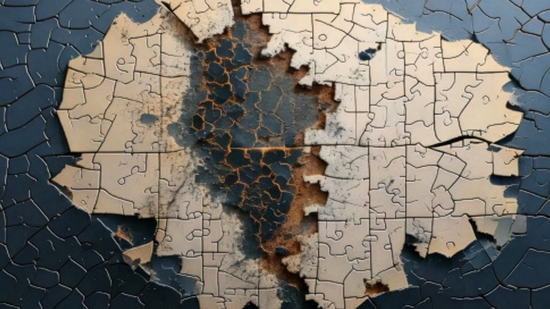
It is the turning point at which we must decide whether we will continue to live amidst this rubble that has been accumulating for years, or whether we will demand that the rule of law, meritocracy, public accountability, the concept of the welfare state and fair distribution be reinstated as fundamental principles.
***
The way we are governed must change.
The mindset that has eroded trust in politics must be reversed. Of course, this cannot be achieved with those who created the problems in the first place. That is why change is essential.
We need a public administration that asks, “What must we do to ensure this does not happen again?”, rather than adopting the mentality of “nothing will happen”.
We need institutions that take preventative action before problems arise, rather than merely issuing statements after the fact.
We need a state that makes rights accessible to everyone, rather than distributing them as if they were favours, or charity.
And most importantly, we need a public order that will restore to people the sense that “I am not alone in this country.”
It is possible to climb out of this well into which we have been pushed for so long.
But this requires strong political will, functioning institutions, a fair approach to distribution, and a society that is capable of saying, “Enough is enough.”
Perhaps the first thing we need to do is very simple: to stop normalising anything and to stand for change in order to leave this rotten system behind.
Source: CHANGE IS ESSENTIAL FOR A GOVERNMENT THAT PRIORITISES JUSTICE, TRUST AND HUMAN DIGNITY