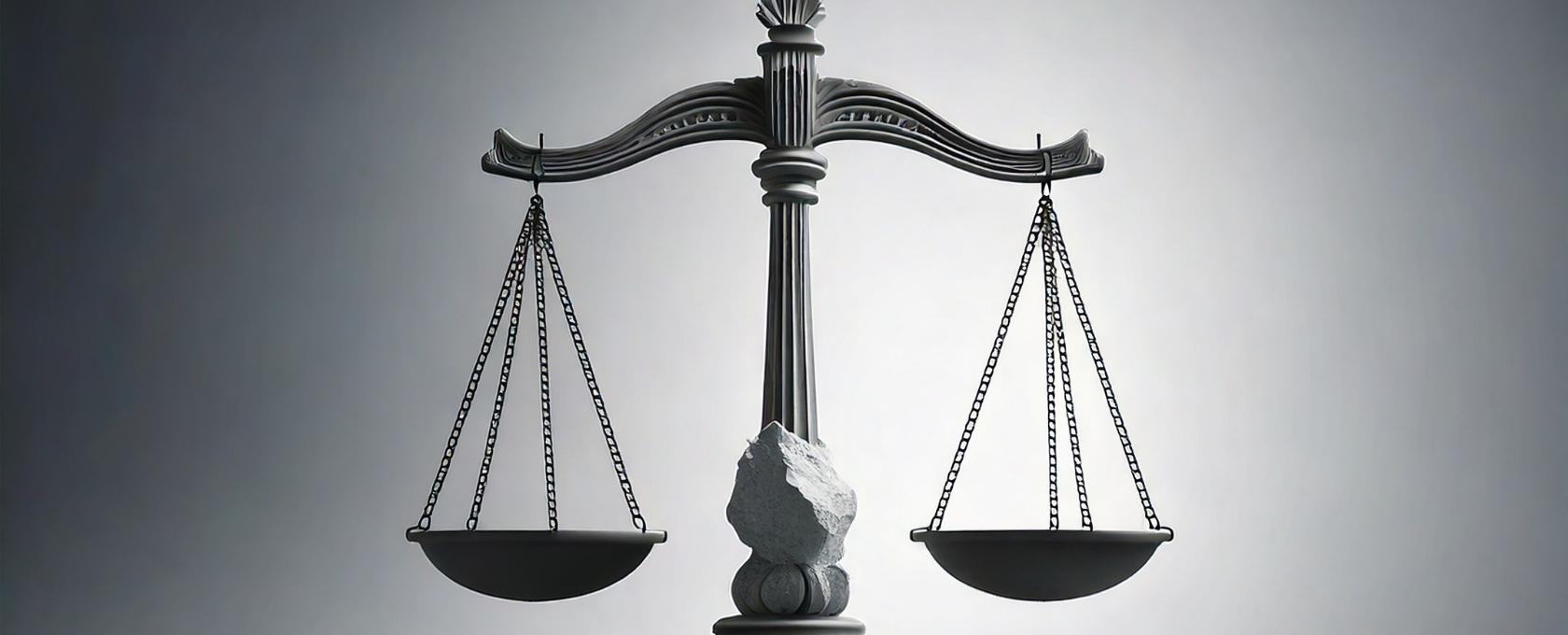
I have been writing for years that a lack of accountability leads to impunity and, consequently, to lawlessness, and in this tormented land, it is proven every day that this is the bitterest truth. A truth first and foremost discovered by our leaders, who enrich themselves at the expense of the naive, utterly naive locals. This time, my impetus comes from the Criminal Court in Nicosia’s majority acquittal in the naturalisation case involving the Al Jazeera video. A case—the “golden passports” scandal—that has left Cyprus exposed internationally, and five years later, after losing the trial in the Criminal Court, the Law Office has the audacity to come out and tell us that it will appeal!
Attorney General George Savvides and Deputy Attorney General Savvas Angelides, who were appointed to their posts by former President Nicos Anastasiades, did not dare to hold a press conference themselves, but sent the Republic’s prosecutor and head of the Law Office’s communications team, Polina Efthivoulou, who announced the decision to file an appeal. Ms. Efthivoulou lashed out at the media and political parties for their criticism, alleging an attempt to undermine the Law Office.
As if the Law Office needed any special effort to undermine it since June 29, 2020, when Nicos Anastasiades appointed his Minister of Justice, Giorgos Savvides, to the position of Attorney General and his Minister of Defence to the position of Deputy Attorney General. I recall that during the last presidential election campaign, Nicos Anastasiades boasted about two things: first, that the three candidates were his people—Averof, Christodoulides, Mavroyiannis; and second, “let anyone come forward and tell me that Anastasiades embezzled a single cent.” But what was the cost of the Anastasiades decade and his inner circle? As I wrote in this column on October 16, 2022, “The President, during the 10 years of his presidency that we experienced, burdened us with: the haircut; the collapse of Cyprus Airways; the slaughter of the Co-operative at the knee; the privatisation of Limassol port with a guaranteed monopoly; the golden passports; the Saudi friend's Boeing that ferried his family to the Seychelles; the "black van" that remains uncaught; Anastasiades's prominent appearances in the Pandora Papers and the Panama Papers; the international disgrace of Al Jazeera; the Nicolatos Commission report; and Crans-Montana, which sent the Cyprus problem over a cliff, entrenched partition, and brought "two states" to the surface.
The fact that he flew to the Seychelles with his entire family on the Saudi Arabian’s flight for free, the President admitted that it was ultimately “an error in judgment to accept a trip to the Seychelles… indeed, that was a misjudgment.” He then admitted that the trip to the Seychelles was not the only one. And as time passes, more surfaces: Vasiliko, worth tens of millions; the GSI, worth tens of millions more. The underlying problem was — and remains — the sense of impunity that runs through our political and institutional system like an underground current, corroding everything it touches.
The recent acquittal in the Al Jazeera “golden passports” case was not simply a legal development. It was a political and institutional event of enormous symbolic weight. Cyprus's international reputation was dragged through the mud. The European Union reprimanded us, flagged us, put us under scrutiny. At home, society waited — however late — for some act of accountability. Instead, we got the Law Office convening a press conference to tell us it "respects" the verdict but will appeal, citing "judicial errors." Prosecutor Polina Efthyvoulou stepped forward, spoke of undermining, of attacks, of Thermopylae. Meanwhile, the heads of the Office — the Attorney General and his Deputy — stayed off camera. In one of the most emblematic cases of the past decade, they did not have the courage to stand before the public.
The substance of the matter does not lie in rhetoric about respecting justice. It lies in the failures the Criminal Court majority itself recorded: key witnesses not called, weaknesses in testimony, gaps in the investigative process. When essential witnesses fail to appear, citing threats and fear; when a journalist who gave a statement to police does not show up in court — the question is not one of communications. It is institutional: who ensured their protection? Who safeguarded the process? If a witness received death threats, as was publicly reported, that is not merely a dramatic detail. It is an alarm bell for the rule of law. Such a claim cannot simply hang in the air without transparency about what was done. Otherwise, the shadow falls across the entire criminal justice system.
Legal expert Elias Stefanou rightly pointed out that an appeal addresses only points of law. The credibility of witnesses has already been assessed. The Court of Appeal will not re-examine the evidence. So if the case collapsed at the level of witness evaluation, that cannot be remedied by legal sleight of hand. The damage was done at the primary stage — investigation and preparation. The two heads of the Law Office served as ministers in the government that implemented and expanded the citizenship-by-investment programme. They sat in Cabinet meetings that approved applications. They are now called upon to pursue criminal accountability for a period in which they were politically present. Even granting full impartiality on their part, the shadow remains. And in justice, a shadow is enough to erode trust.
The Christodoulides government, rather than grasping the depth of this crisis of confidence, opts for silence or vague platitudes about institutional respect. But the crisis is not abstract. It is tangible and accumulated. From “golden passports” to the “black van", from the Co-operative to the Vasiliko terminal, the overriding sense is that no one who is truly powerful is ever held to account. The Vasiliko LNG terminal is a case in point: a project presented as an energy breakthrough, which ended in fiasco, with the European Union demanding the return of tens of millions of euros. Who took political responsibility? Who answered for the irregularities, the cost overruns, the failures? Nobody. Impunity has become the regime.
Against this backdrop, the rhetoric about "undermining" the Law Office looks like an inversion of reality. Criticism does not undermine institutions. The absence of accountability does. When citizens watch a succession of high-profile cases collapse or stagnate; when they hear of Cyprus being condemned at the European Court of Human Rights; when they observe the same individuals remaining immovably in their positions — their distrust is not the product of populism. It is the product of experience.
The Christodoulides government had the opportunity to signal a genuine break with the past. To raise questions of institutional renewal, separation of roles, strengthened independence and accountability. Instead, it appears to be managing the Augean stables by quietly shovelling the muck into a corner, hoping time will blunt the stench. Cleansing is not a slogan. It is a prerequisite for the survival of Democracy. And for as long as the Law Office and the government choose defensive rhetoric over genuine accountability, the muck will keep piling up — until the day when no appeal, no press conference and no invocation of institutional respect can hide it any longer.
This article was first published on 22.02.2026